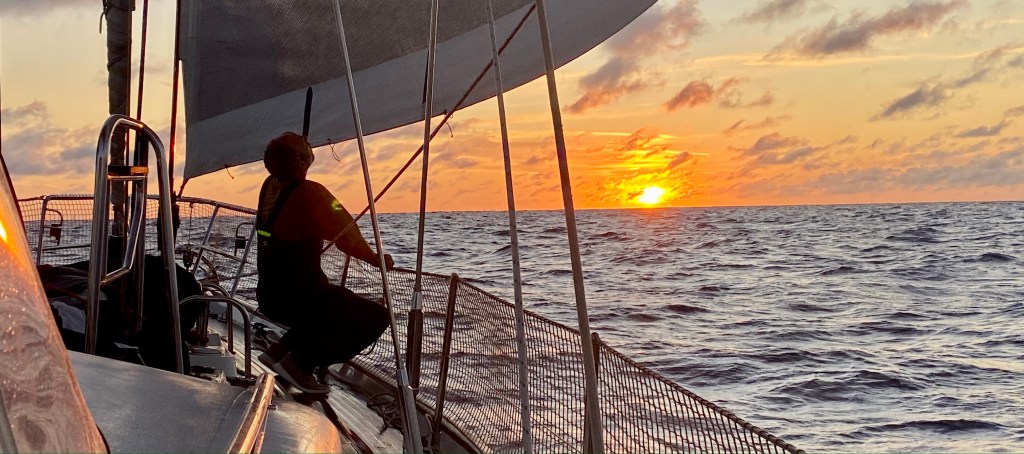
It’s about 5am and I’m walking along the deck thousands of miles from land, somewhere between the Galapagos and French Polynesia, picking up kamikaze squid and flying fish that landed there during the night, and wondering what I would write about this experience.
What do people do out there in the ocean for weeks on end?
We never get bored on passage. Just this morning Naomi had a visit from some dolphins which never gets old. I’m less inclined to pull out the camera these days and more so just savour the moment.
Personally, I spend a lot of time tweaking the sails and doing my best to get top performance from this amazing boat. First and foremost, I’m making sure we don’t fall behind Arabella (a 67ft Fontaine Pajot catamaran). We are always racing each other and it is uncanny how similar these boats perform. We understand the sailing strengths and weaknesses of each boat.
Grant and I spent many days studying the best route prior to the trip. The routing software wanted to take us north over the equator to miss the doldrums (Intertropical convergent zone where there may be no wind) and to ensure we kept motoring down to a minimum. Intuition wants to take you direct along the rhumb line, 2800 miles as opposed to the recommended 3300 nm.
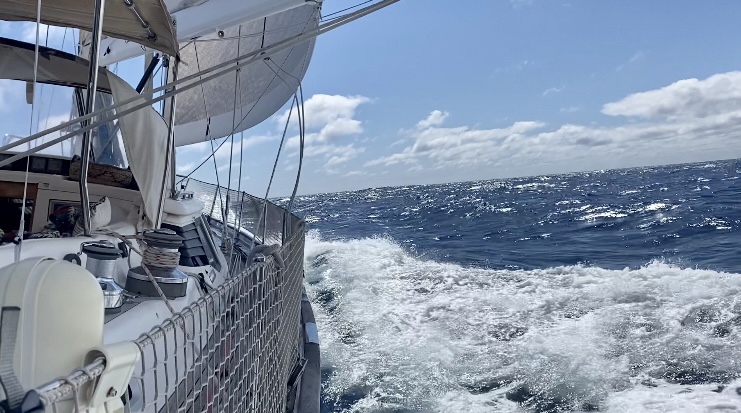
Ocean currents plays a huge part in these passages, we had 2-3 knots, sometimes more, pushing us in the right direction. We had a maximum speed of 15.3 knots. On that day, we covered 249.6 miles in 24 hours (170 nm would usually be a really good day). These ocean currents affect the whole world weather system, I never realised they would be so strong. One would expect the equator to be stinking hot but the cold currents maintain the air surprisingly cool especially around the Galapagos Islands.
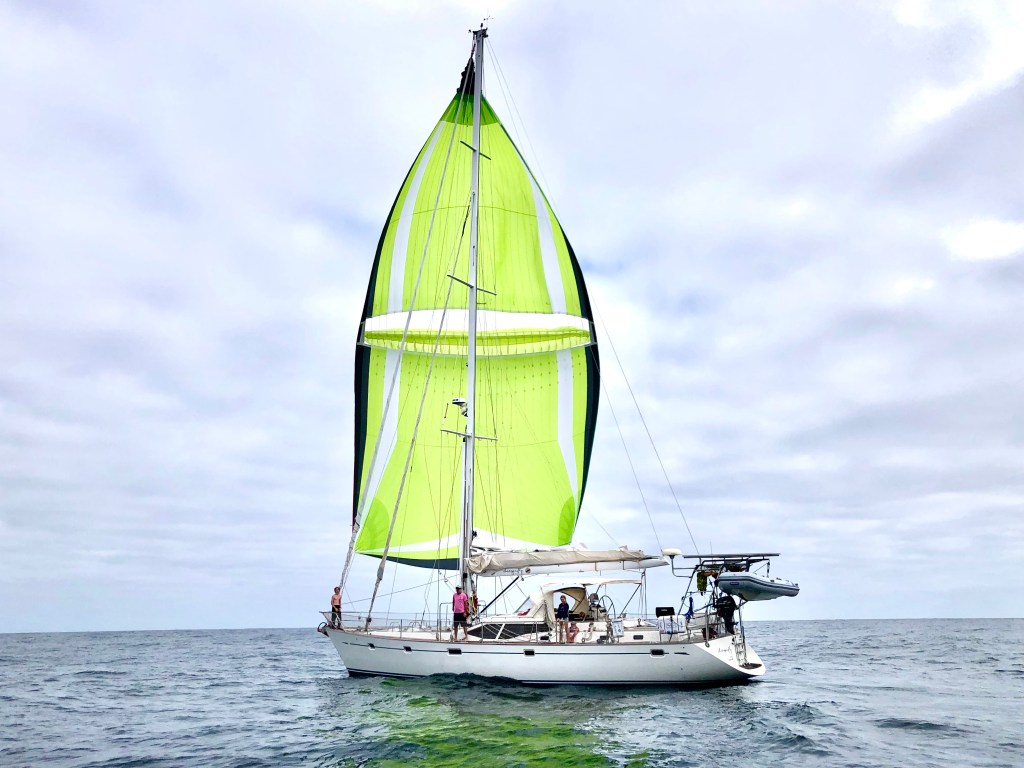
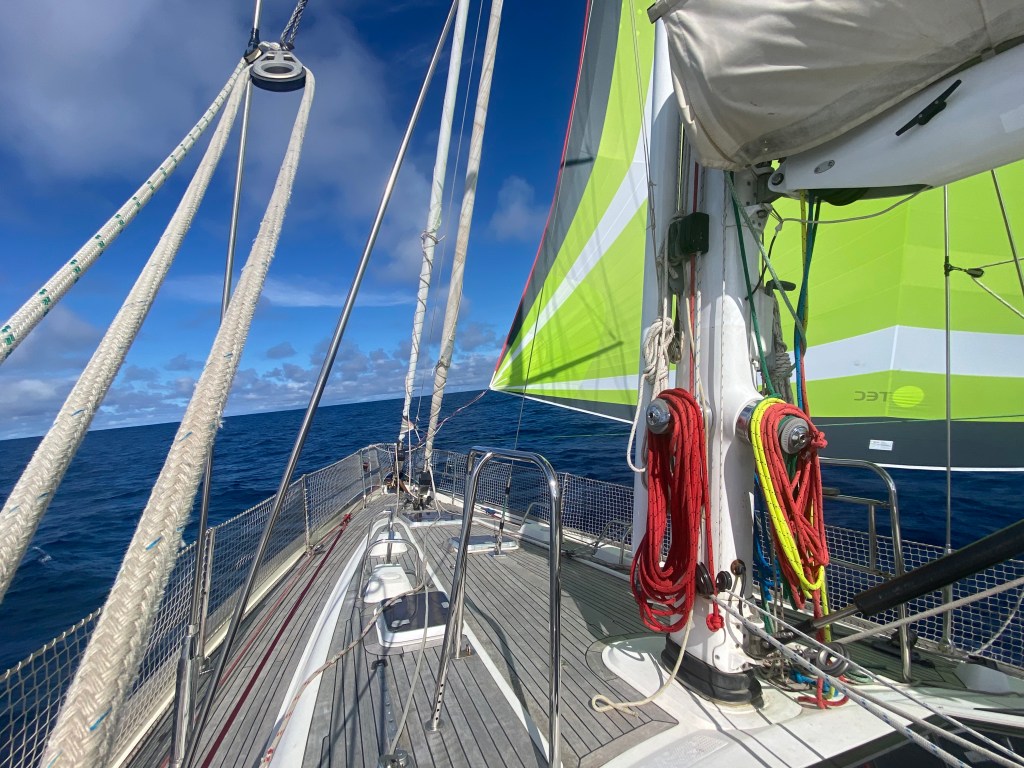
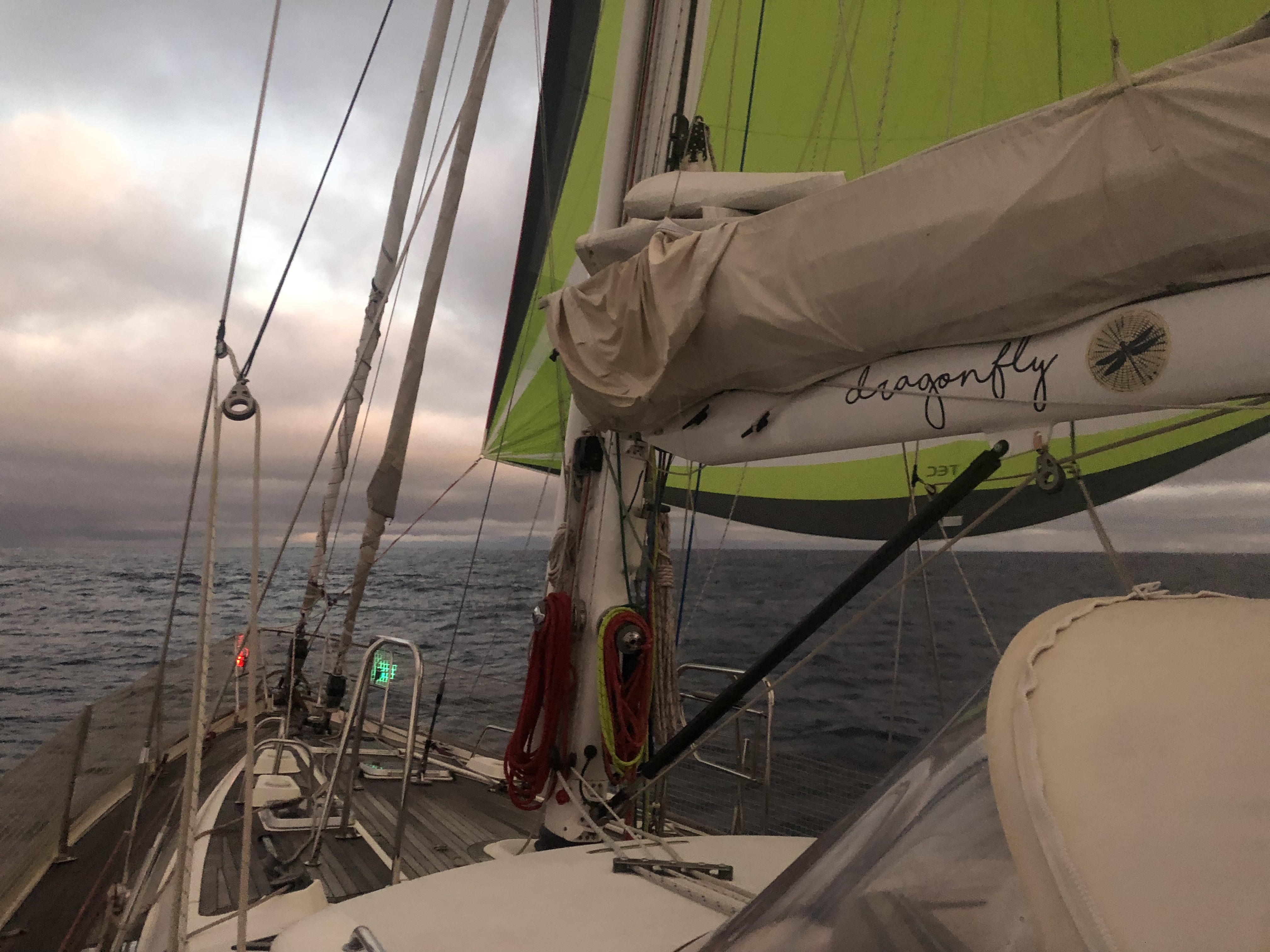
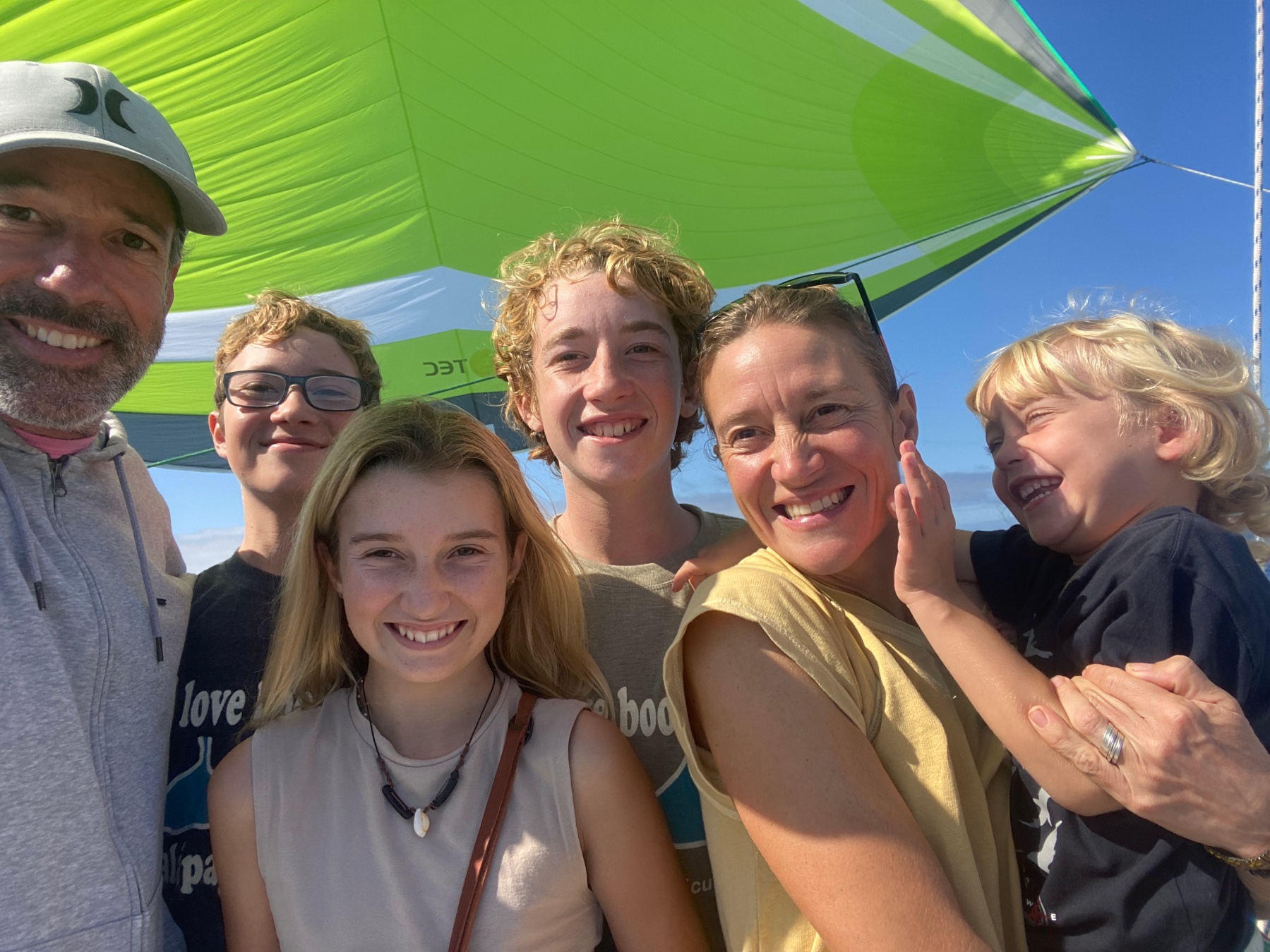
We have been fortunate to have the parasailor up for half the trip, ripping along, it’s definitely the most exciting sail to fly. We did broach once! When I was down in the bathroom for a quick pit stop, Murphy’s law of course. Tama grabbed the wheel and manually recovered from the autopilot. The whole incident was over in a flash but enough to rattle the cage.
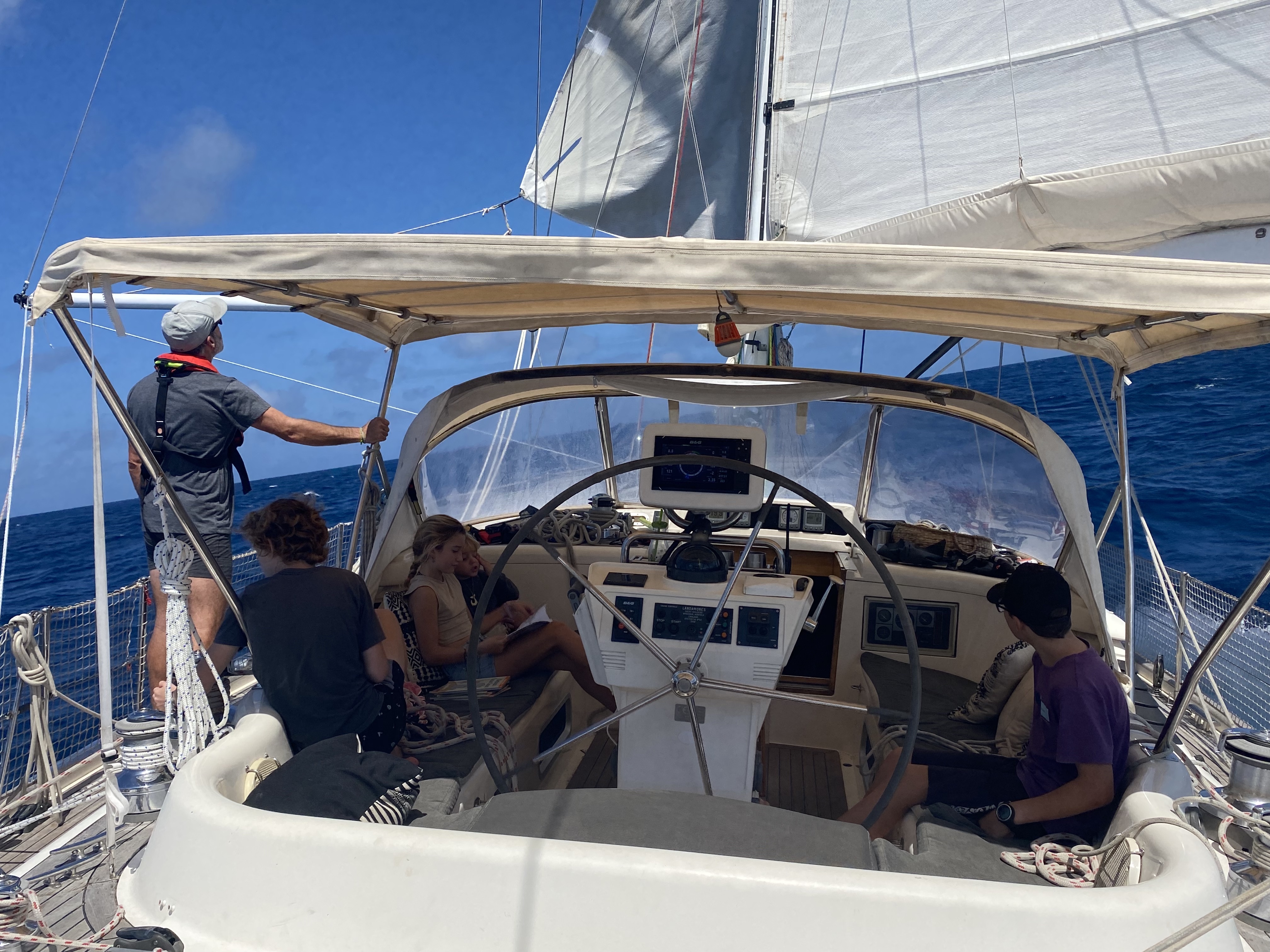
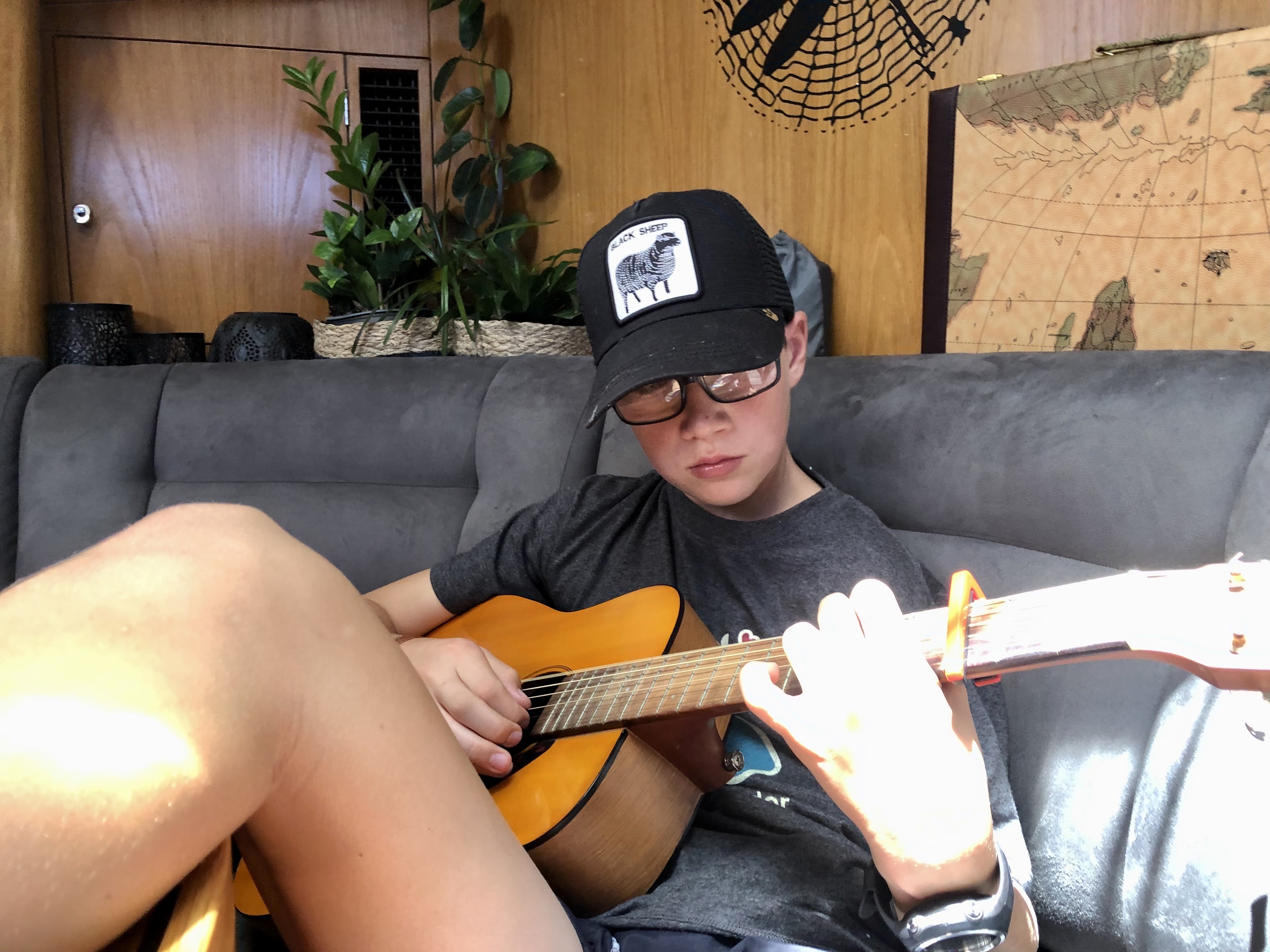
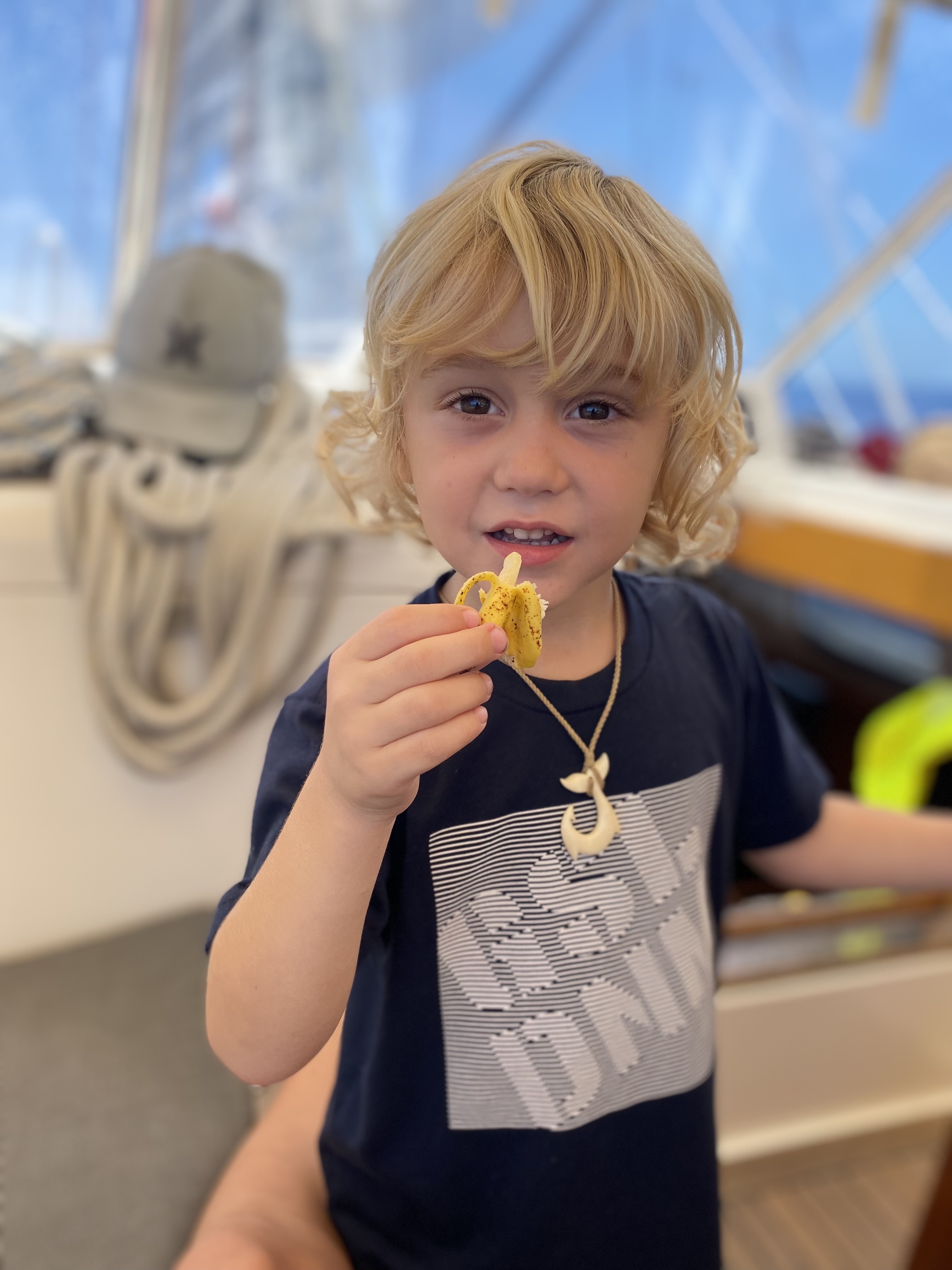
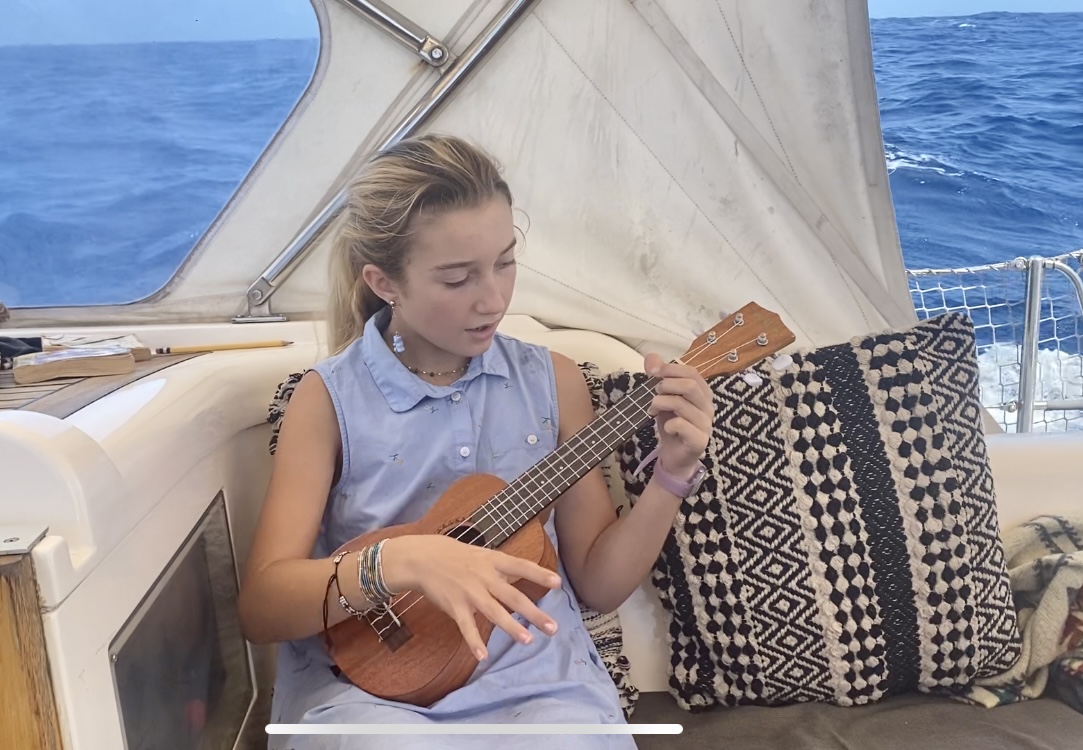
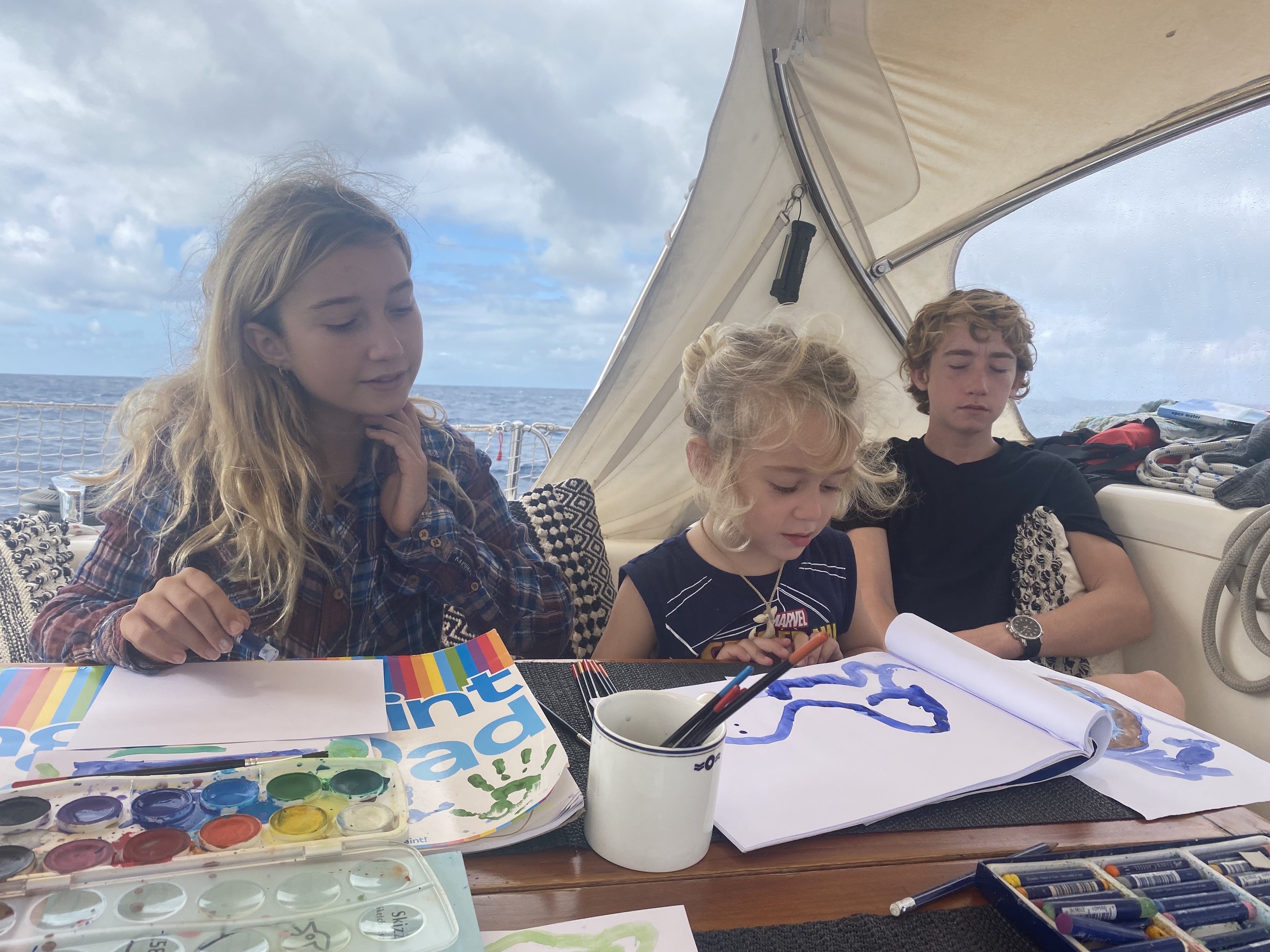
Our days are made up of some form of schooling if it’s not too rough, cooking, baking, reading, sudoku, Chinese checkers and on this trip, lots of backgammon. Boxing, face masks, drawing, lego… We eat and we hang out together in the cockpit, we pick bananas off the vine ideally before they land all over the deck, we do occasional sail repairs, play music, and sometimes watch the odd movie.
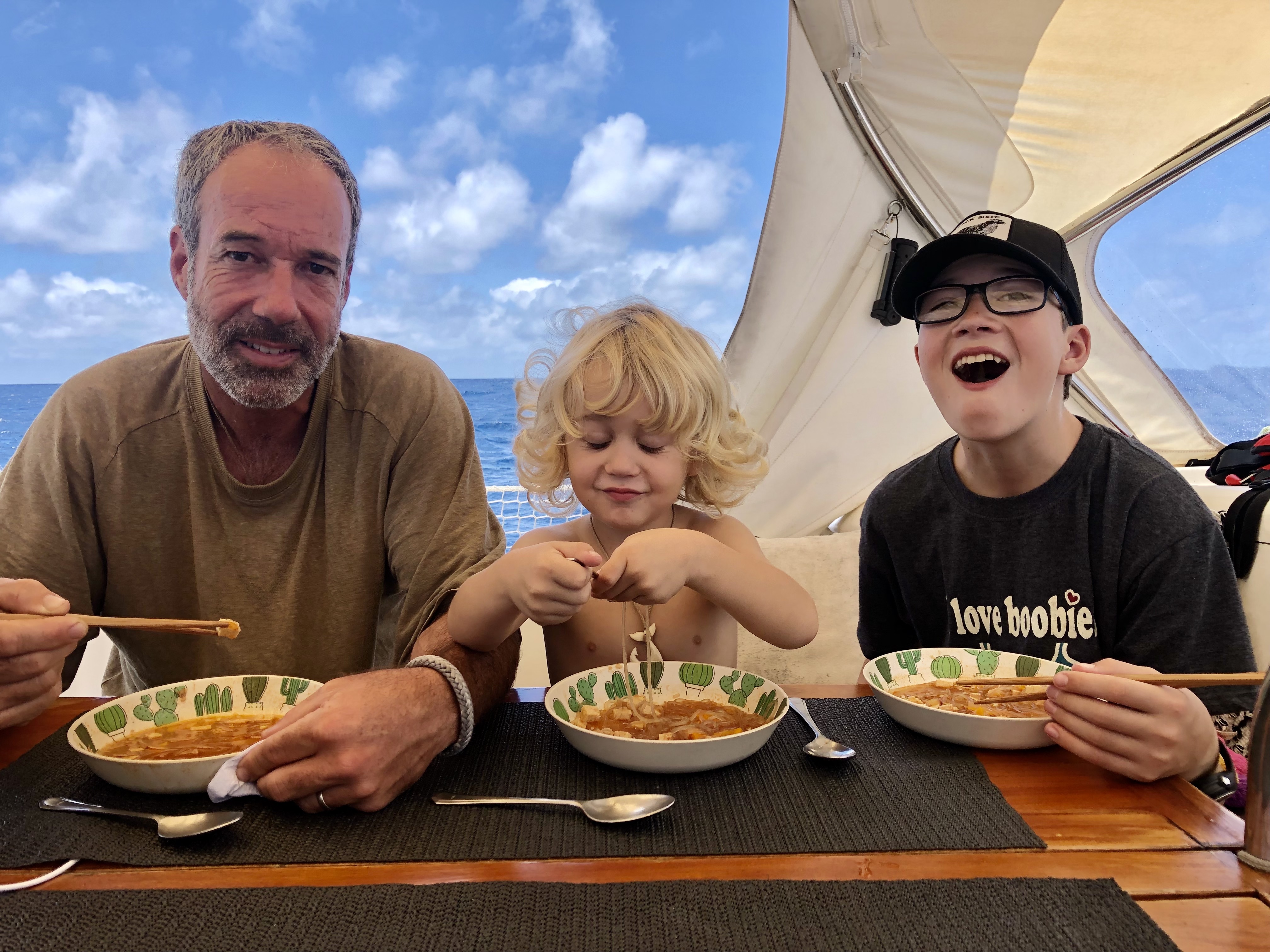
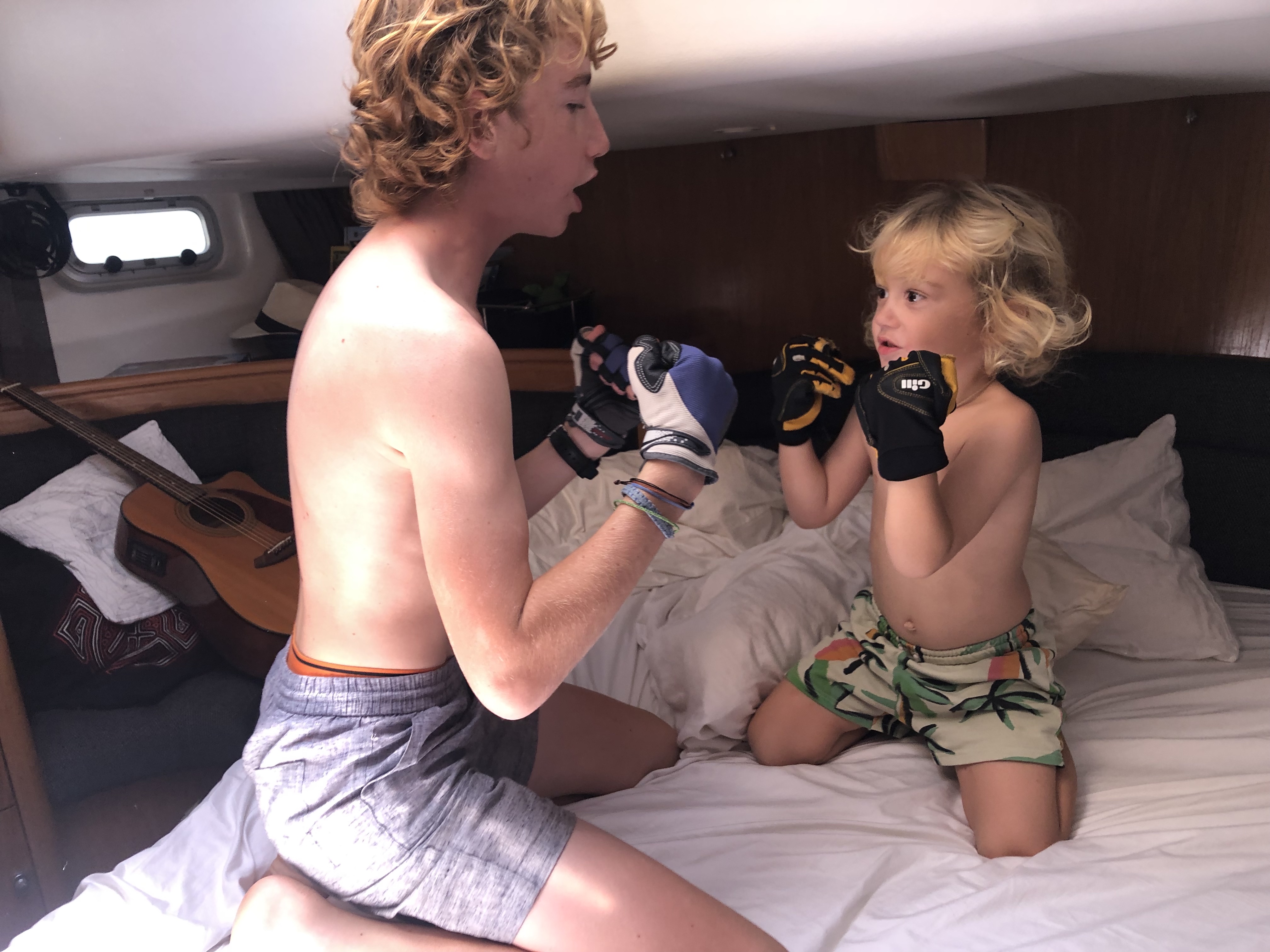
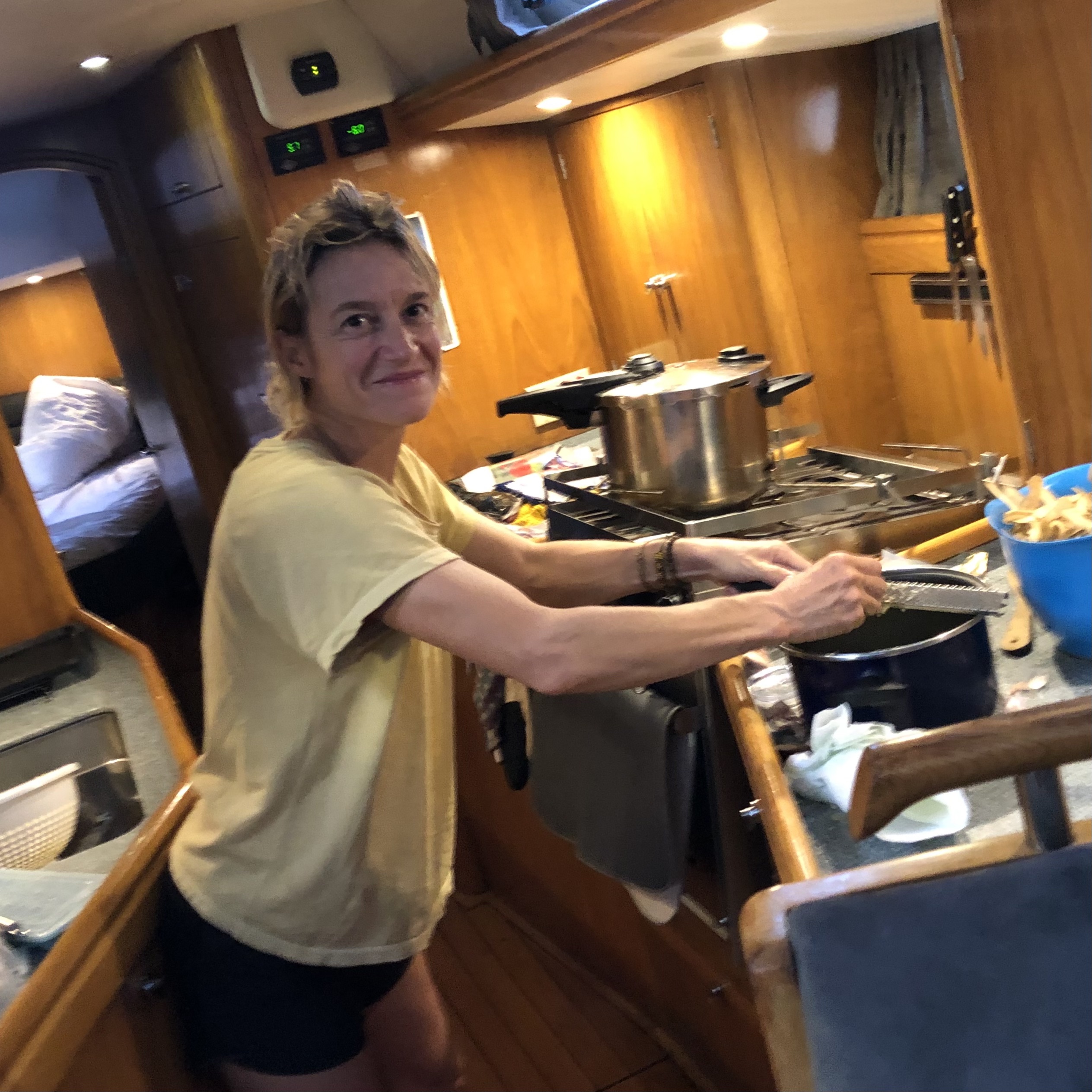
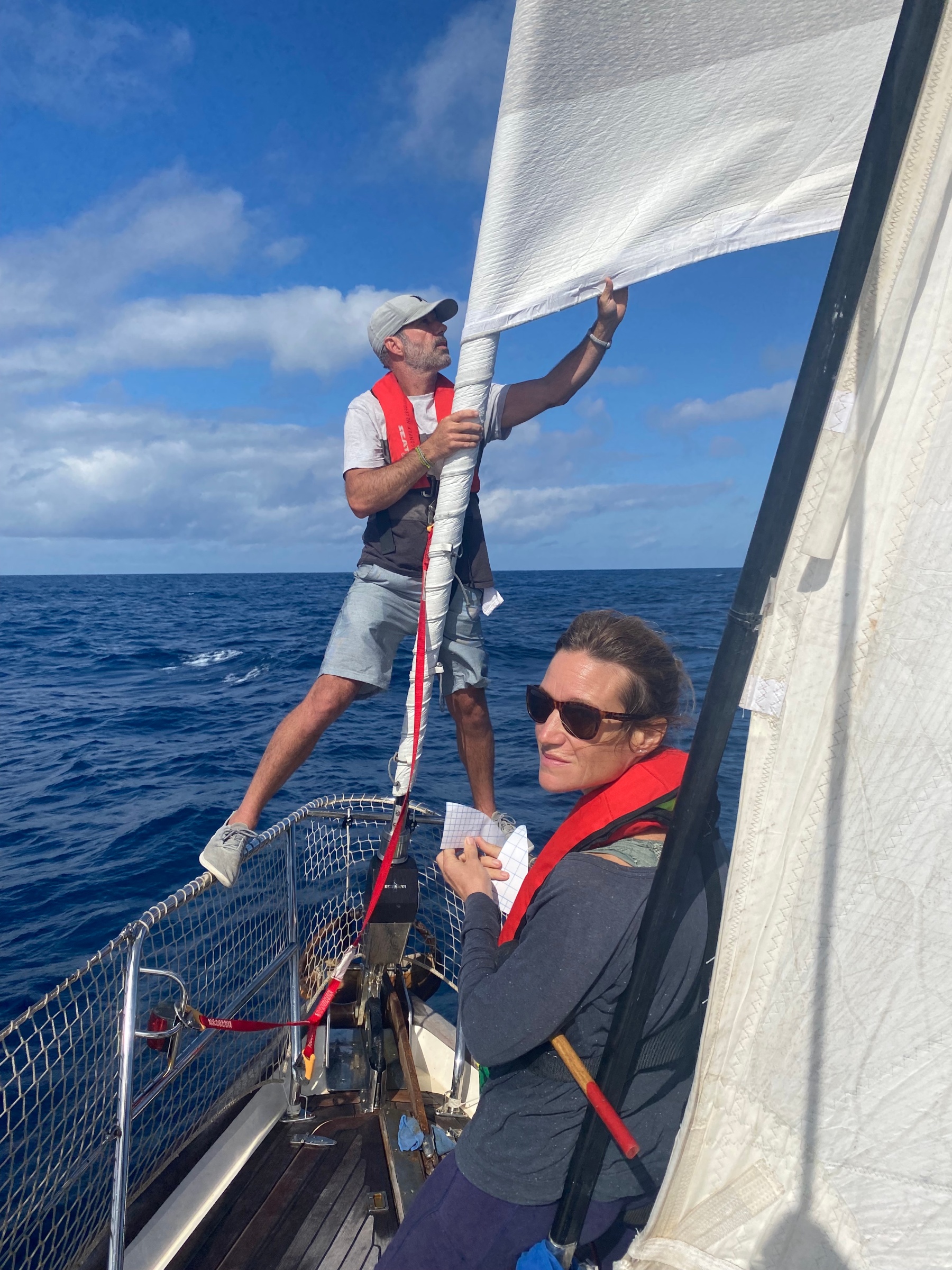
The vibe on the boat is good until somebody chooses to play the cantankerous card but it eventually fizzles out and everyone is all happy again. Living in close quarters, tired from a lack of sleep and knowing you can’t go off for a walk can be the most challenging part.
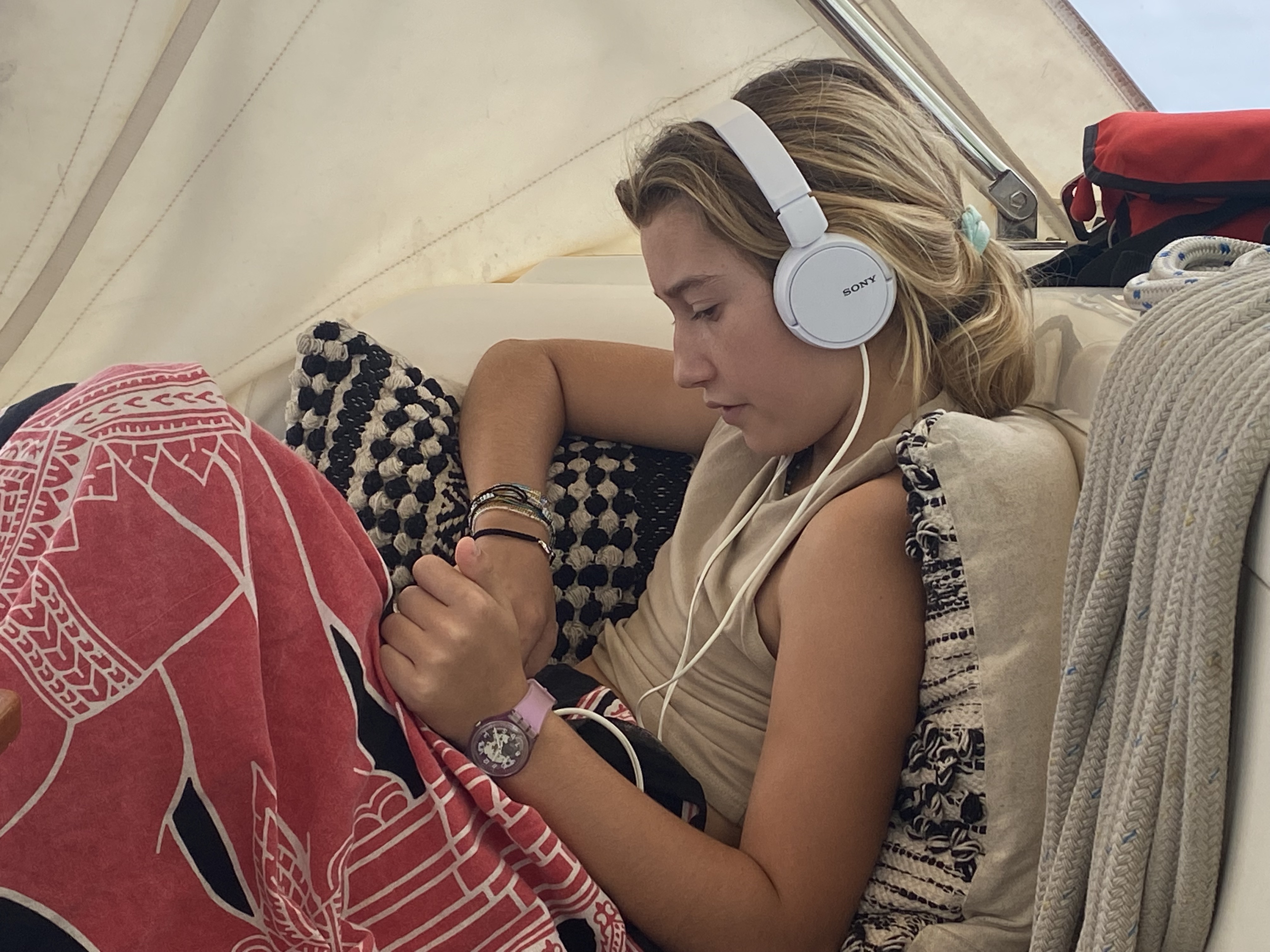
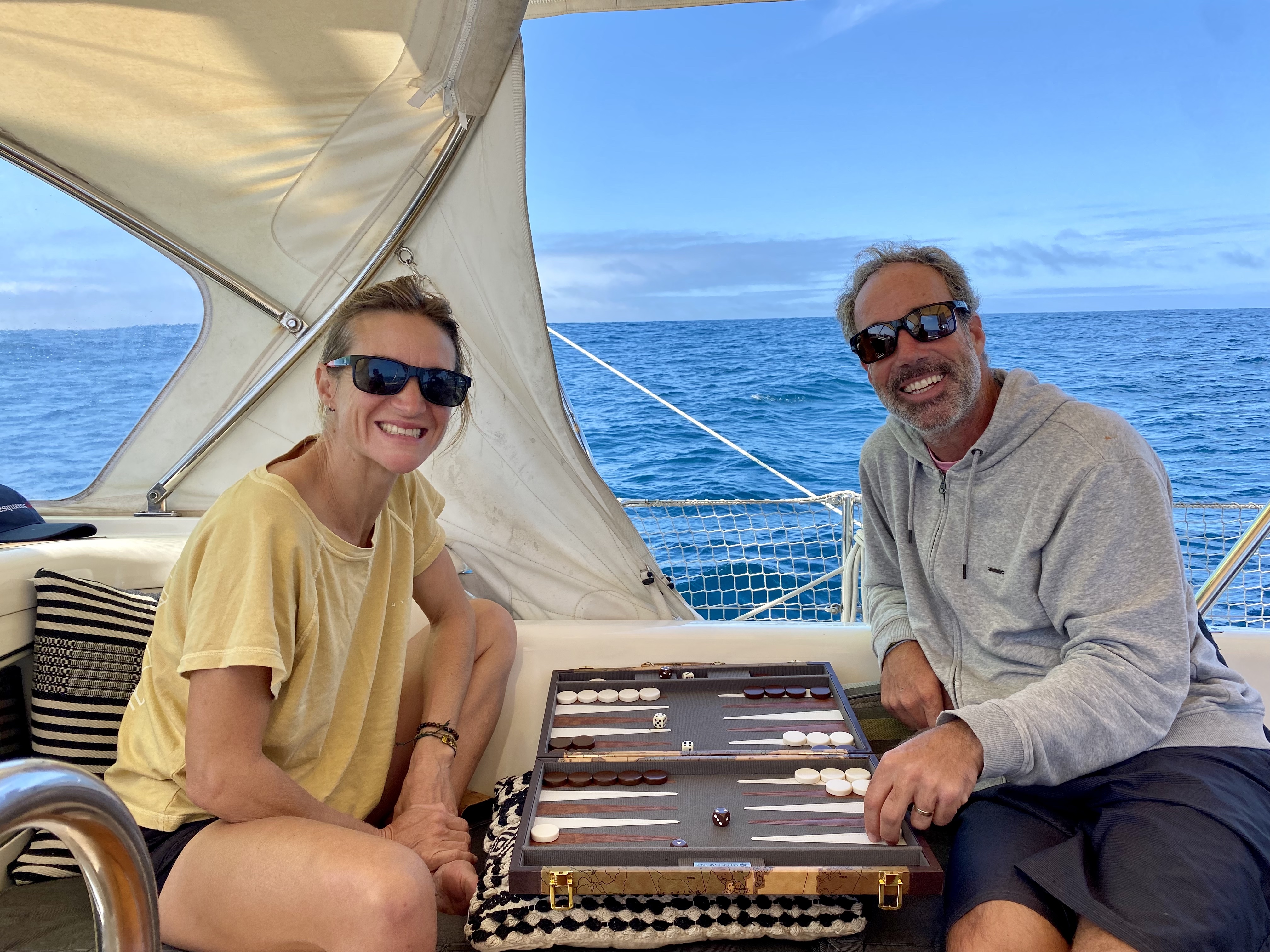
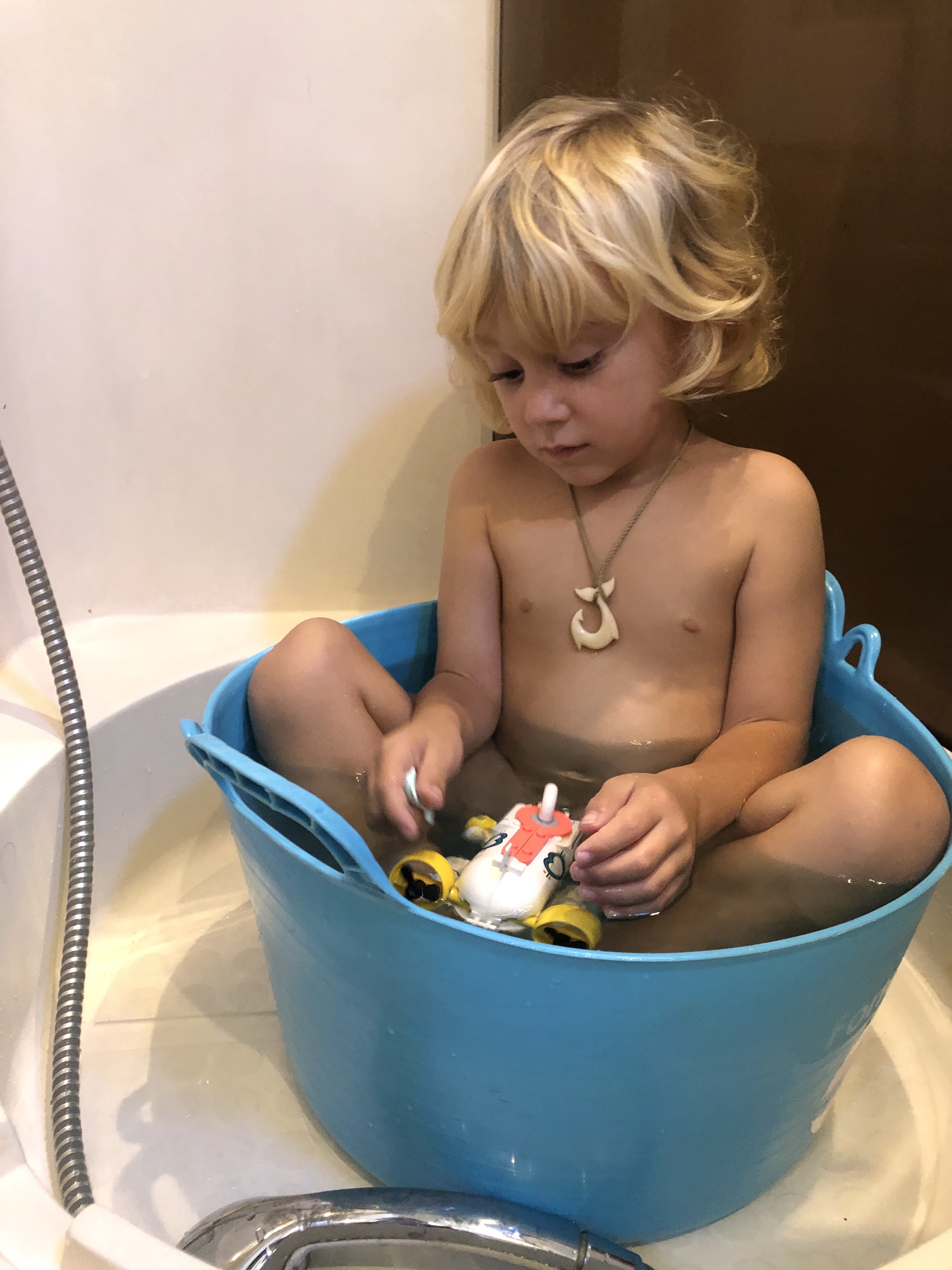
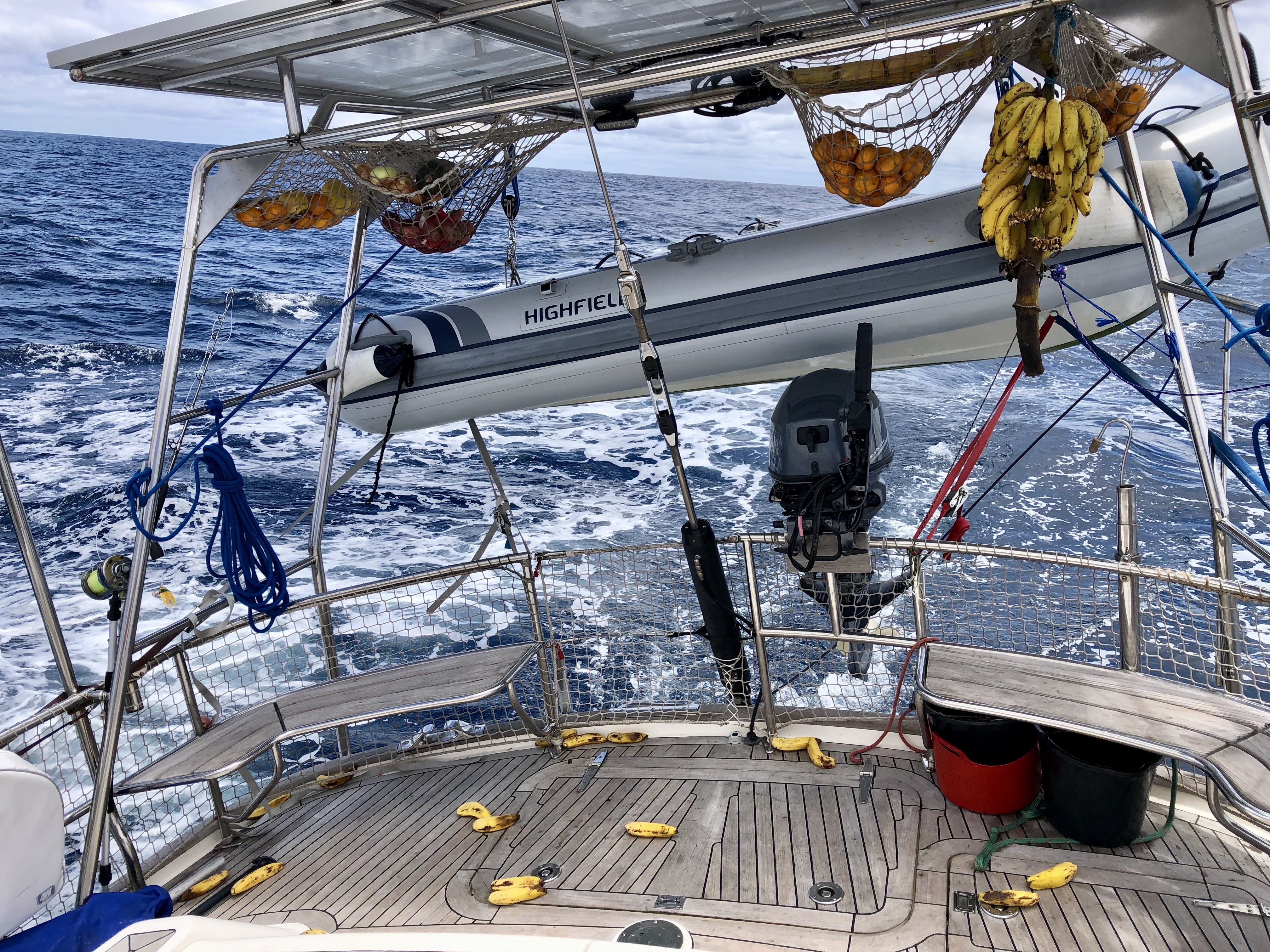
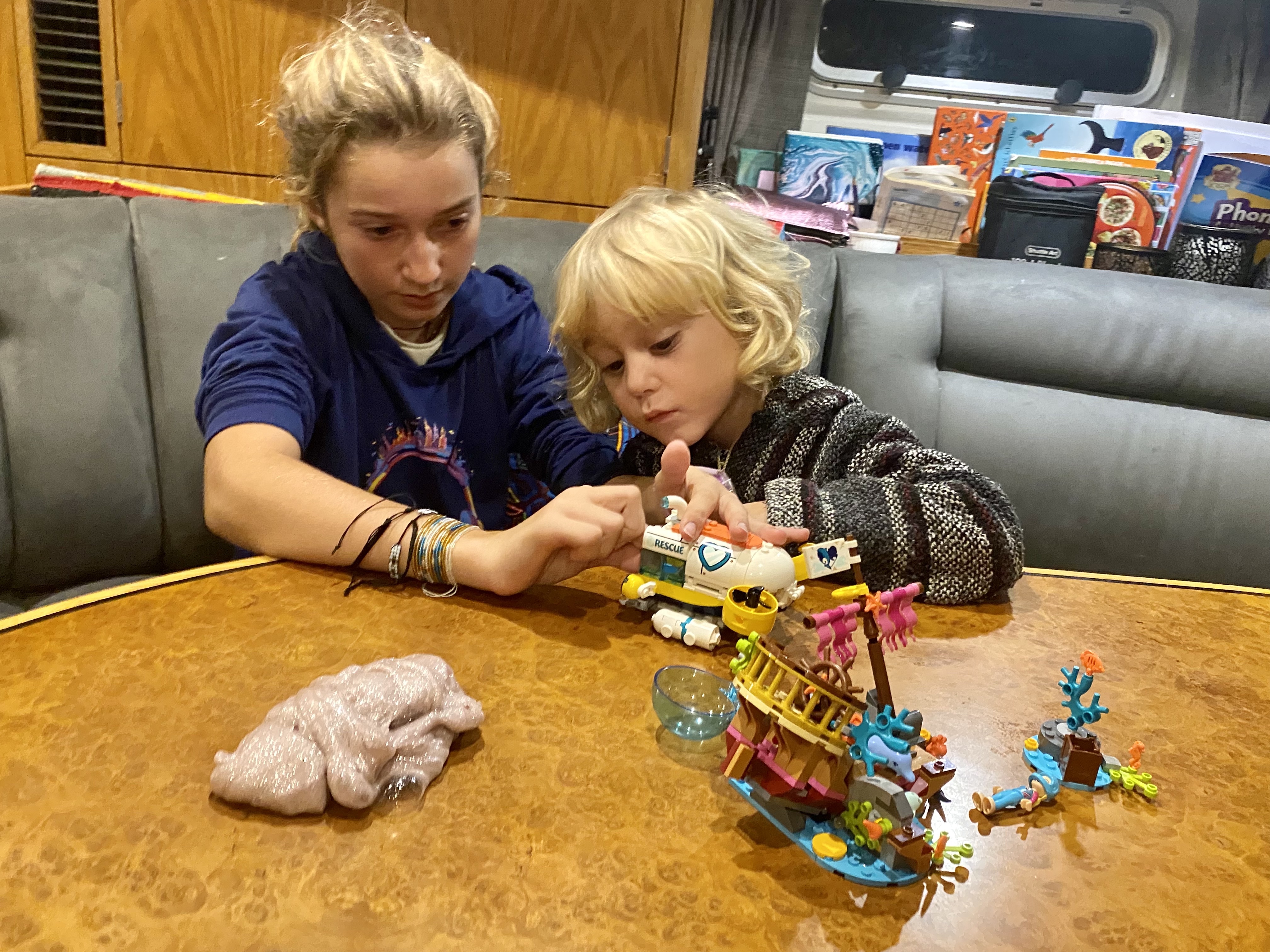
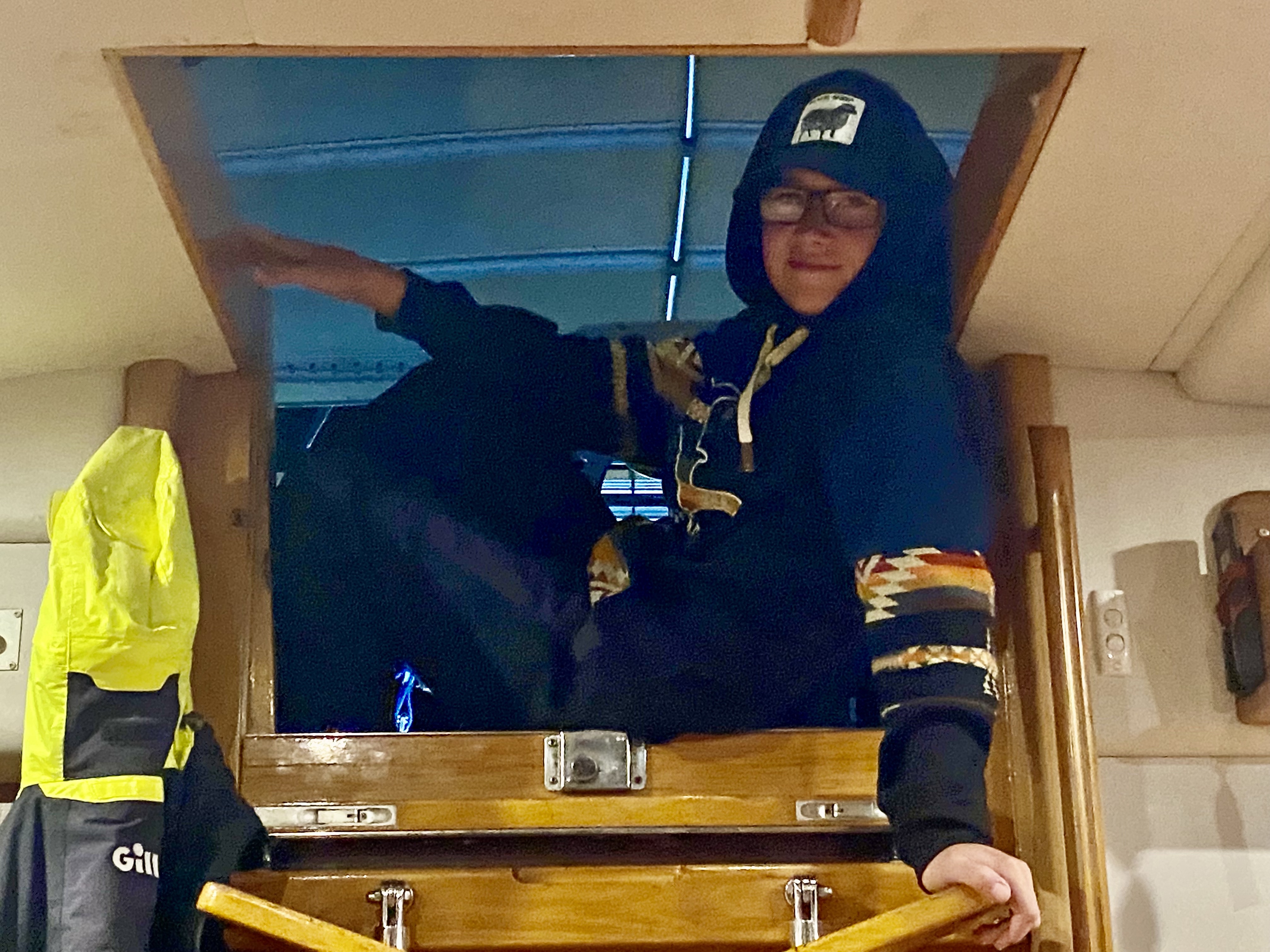
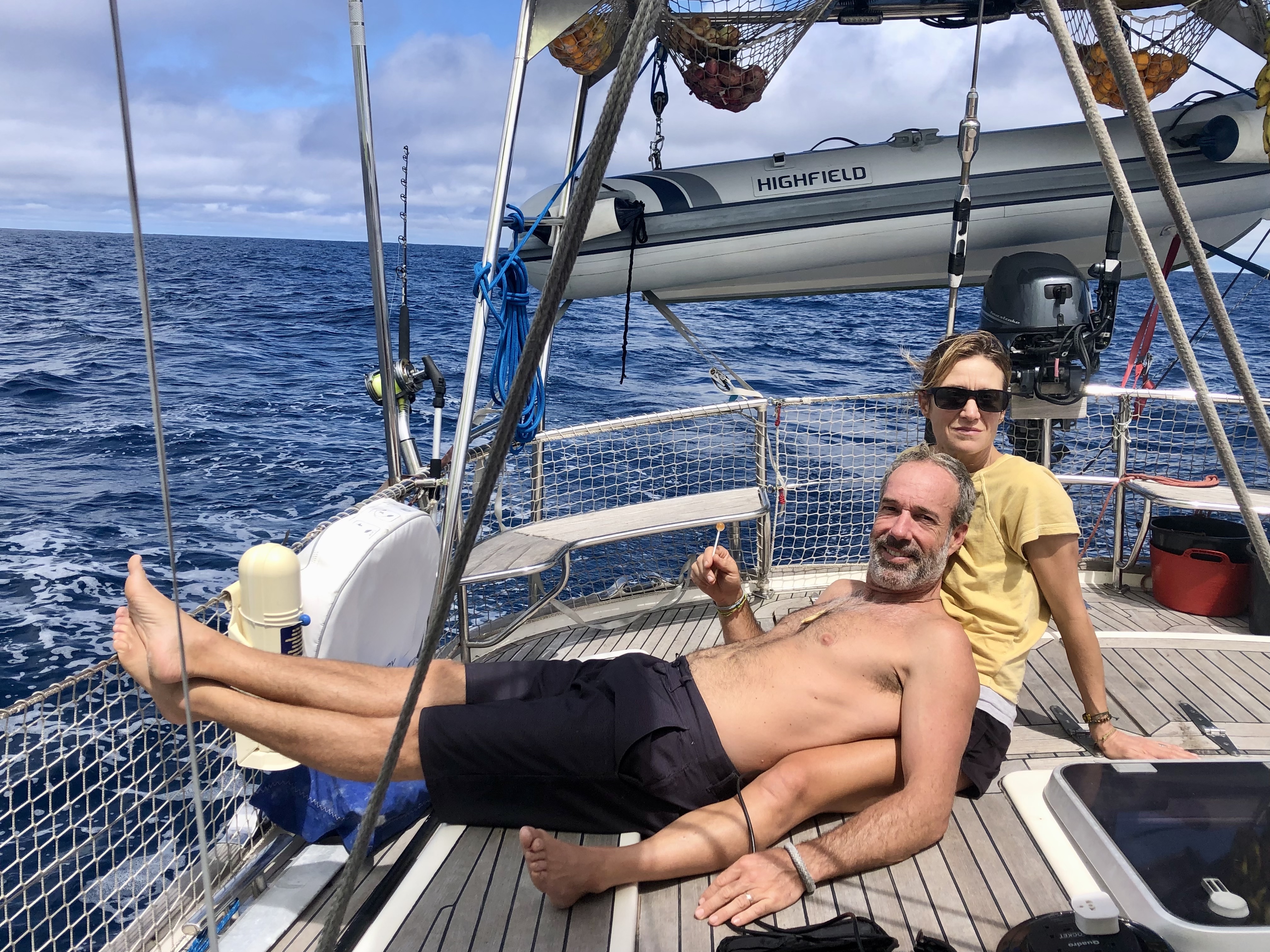
The watch schedule works well for all of us. Tama plays a huge part in allowing Amandine and I enough time to rest. The three of us rotate 2 hours on, 4 hours off during the night and then we mix it up in the day with Luca and Naomi helping out with 2 hours each. Lee is our jester, we love to see his sleepy head appear up the companion way every morning. I always sleep in the cockpit during passages to support the helmsman when needed. The autopilot does most of the work, we generally don’t touch the wheel.
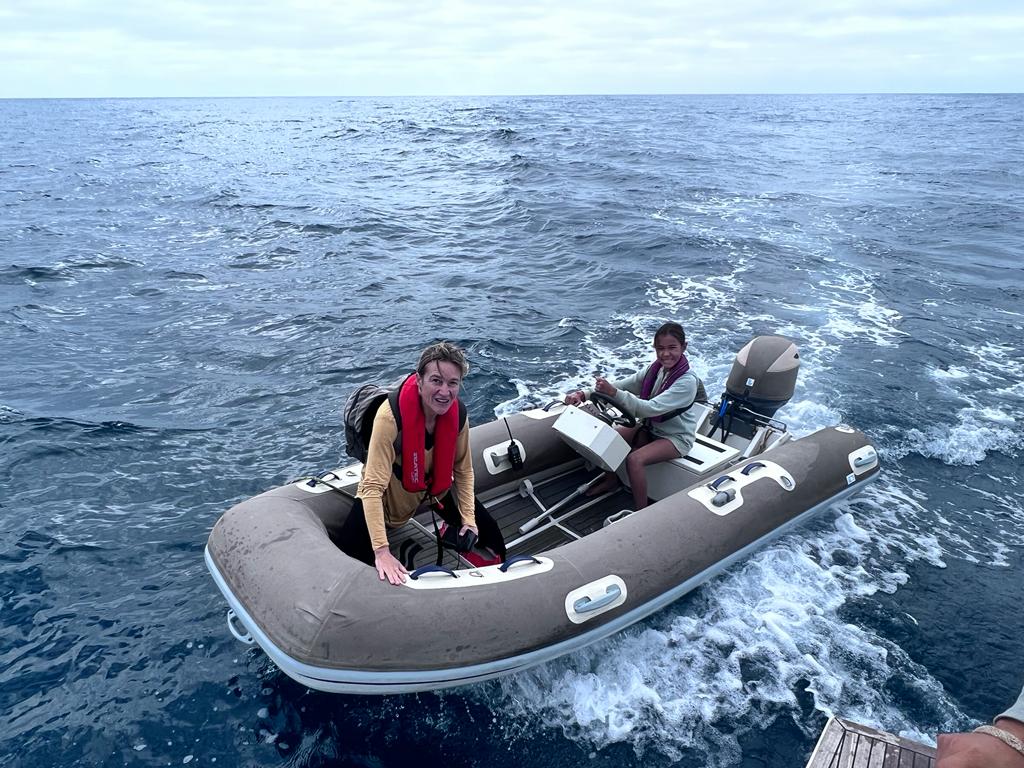
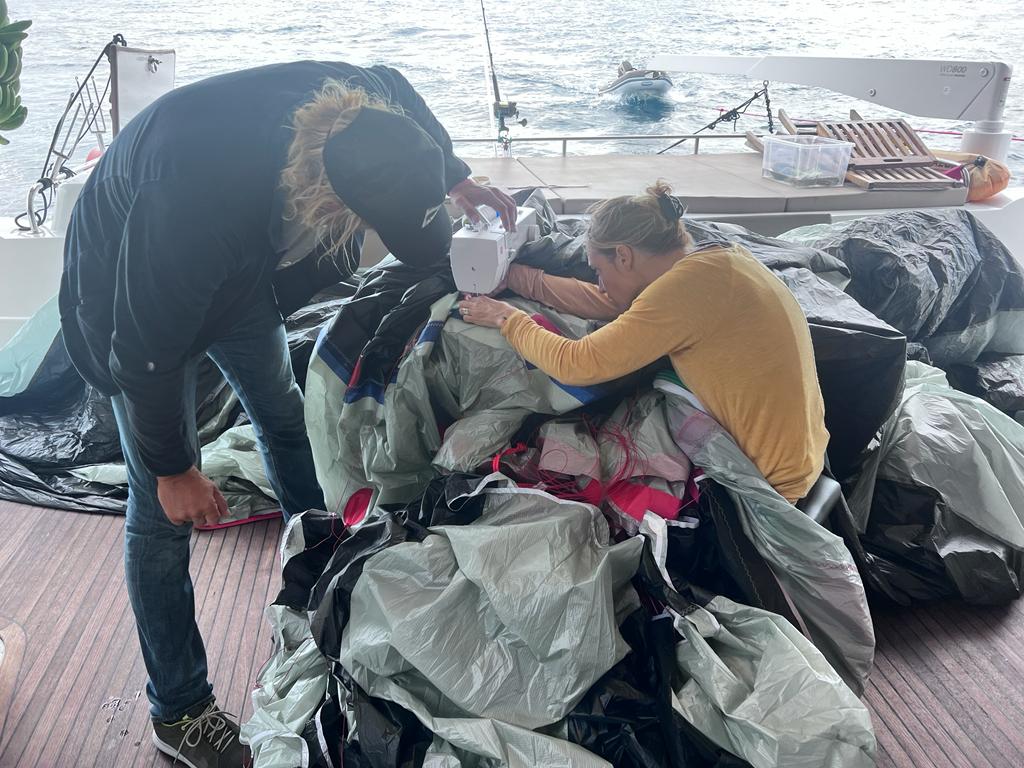
Three days into the crossing, Arabella tore a rip in their spinnaker and the temporary repair with tape wasn’t holding. Fortunately the next morning we were becalmed so Grant lowered their tender and his daughter Arabella came over to pick up Amandine with our sewing machine so she could stitch it up for them.
At the same time I was chatting with Grant on the VHF and mentioned that one of our cockpit speakers just died. He said he had one in the fly bridge, same size and not in use. He unscrewed it and sent it over. Who would have thought so much resource was being shared in the middle of the Pacific Ocean! It was surreal transferring crew and gear out there while Dragonfly was under sail. A couple of hours later, the sail repair job was done and we were all sailing again.
We had a big scare half way across when I checked on the steering in the transom and found some water. My jaw dropped when I realised it was salt water. There was a constant drip coming up through the rudder stock. I immediately emailed Oyster through satellite mail to get some advice on this. They told me that although it is a serious issue, we were not in trouble. They will send us new seals from the UK, we’ll have to pull the boat out in Tahiti and get this done.
It is very comforting to cross an ocean with a buddy boat. We were rarely over 3 miles away from each other and spent a lot of time conversing over the vhf.
We have only seen one fishing boat, and another massive vessel that we initially thought was on fire, there was a lot of smoke on the horizon! They were about 8 miles away but wouldn’t answer the radio and didn’t show on radar so we figured it was a military ship doing testing. And that was it for the whole trip!
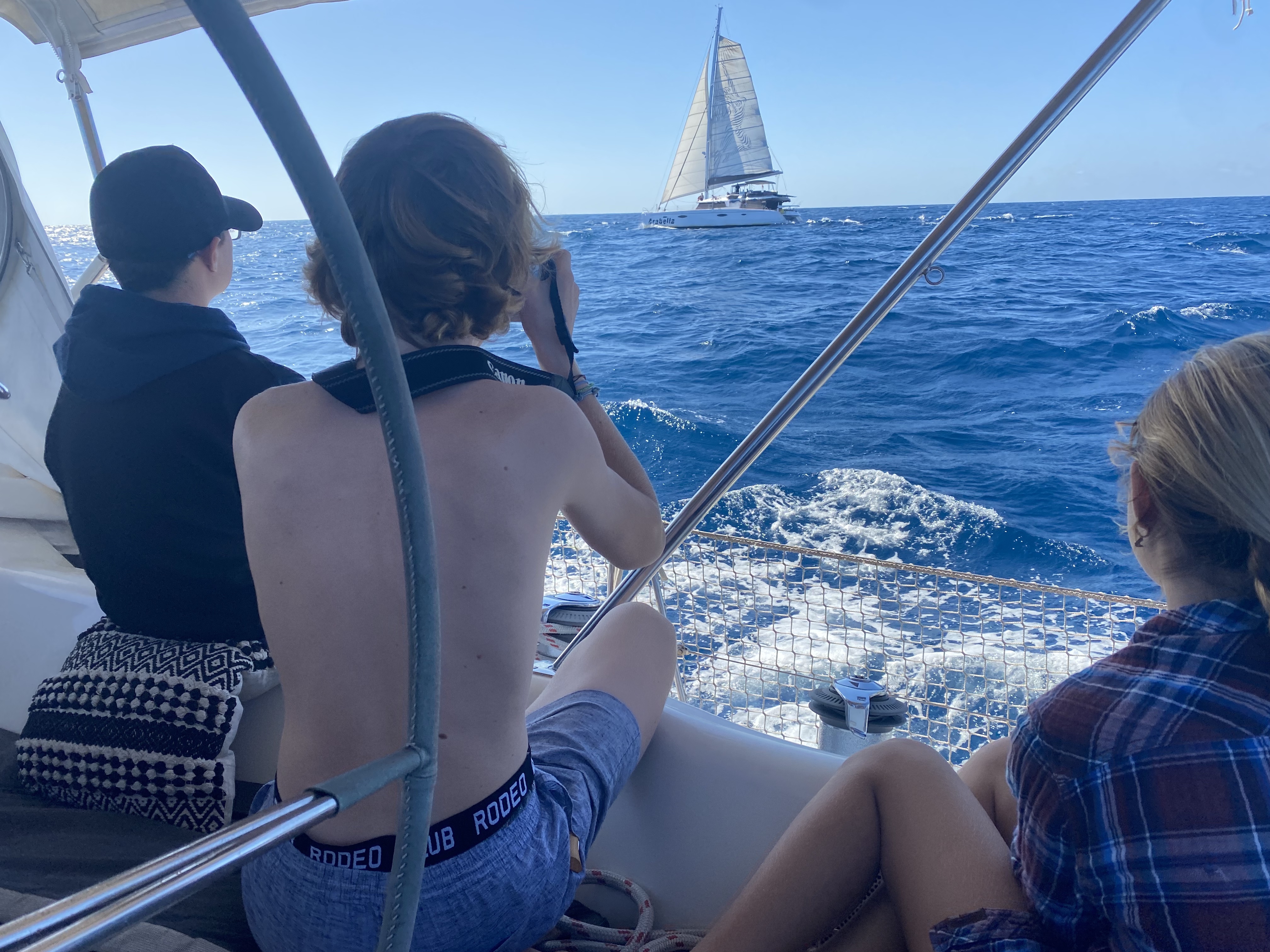
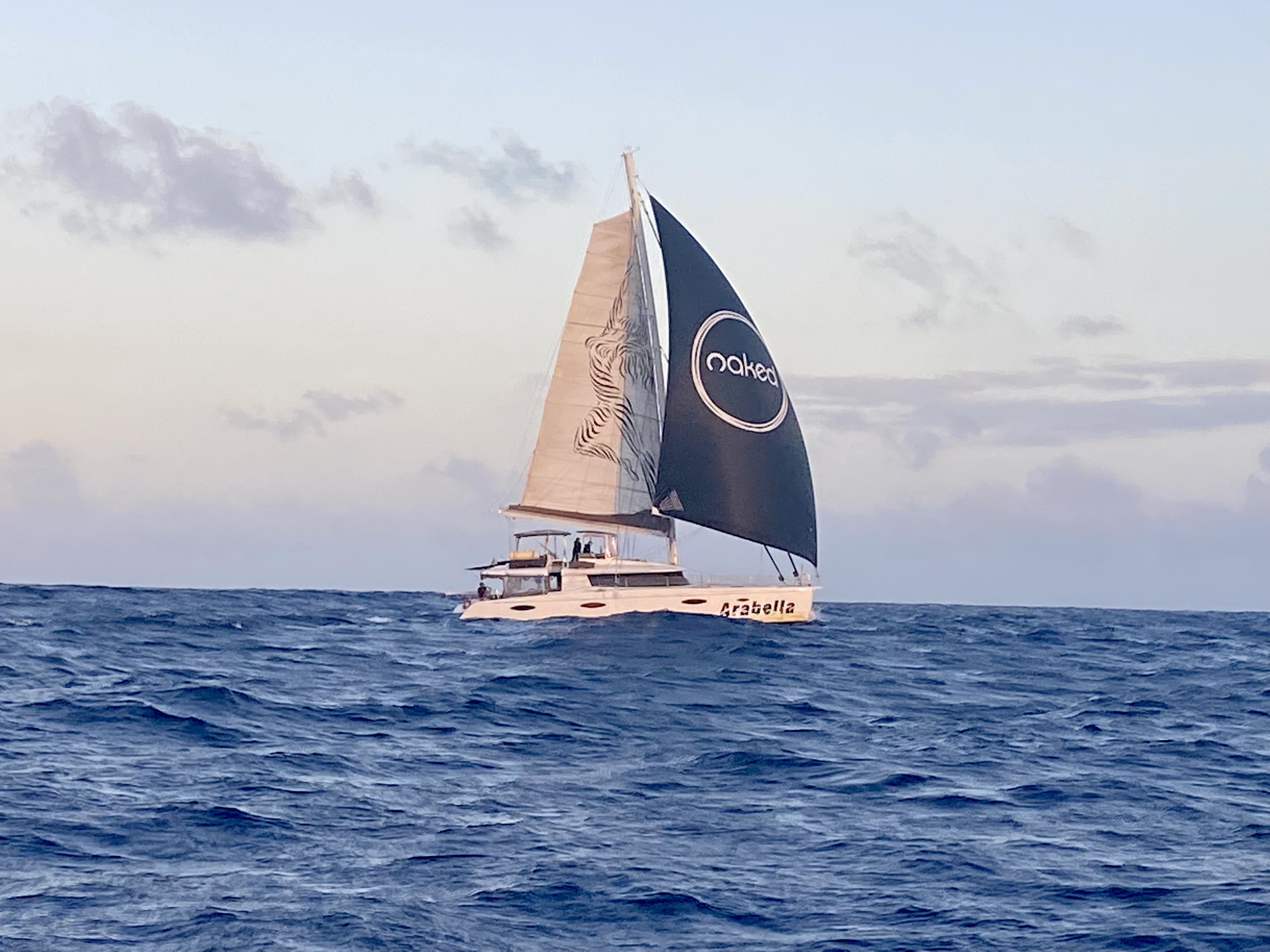
The chitter chatter on the radio is always amusing, where discussing the weather is actually a real thing for once! Grant and I bounce ideas off each other all the time discussing wind angles, boat speed, sail changes, currents, squalls and at times, fishing strategies. Saying that, we haven’t fished so much this time mainly because we have had the spinnaker up. Trying to slow the boat down to land a big fish would end up in “reel” kuffuffel.
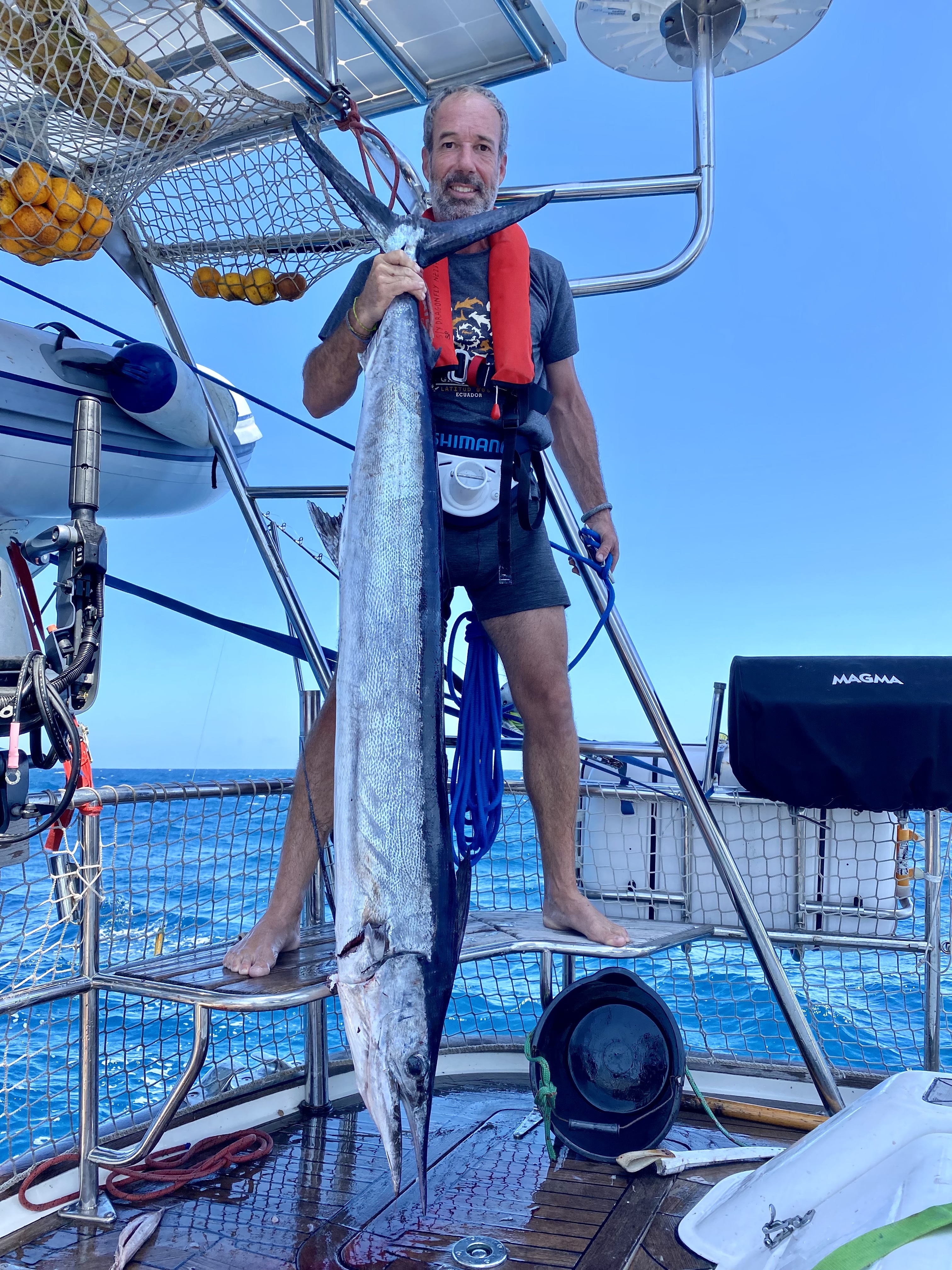
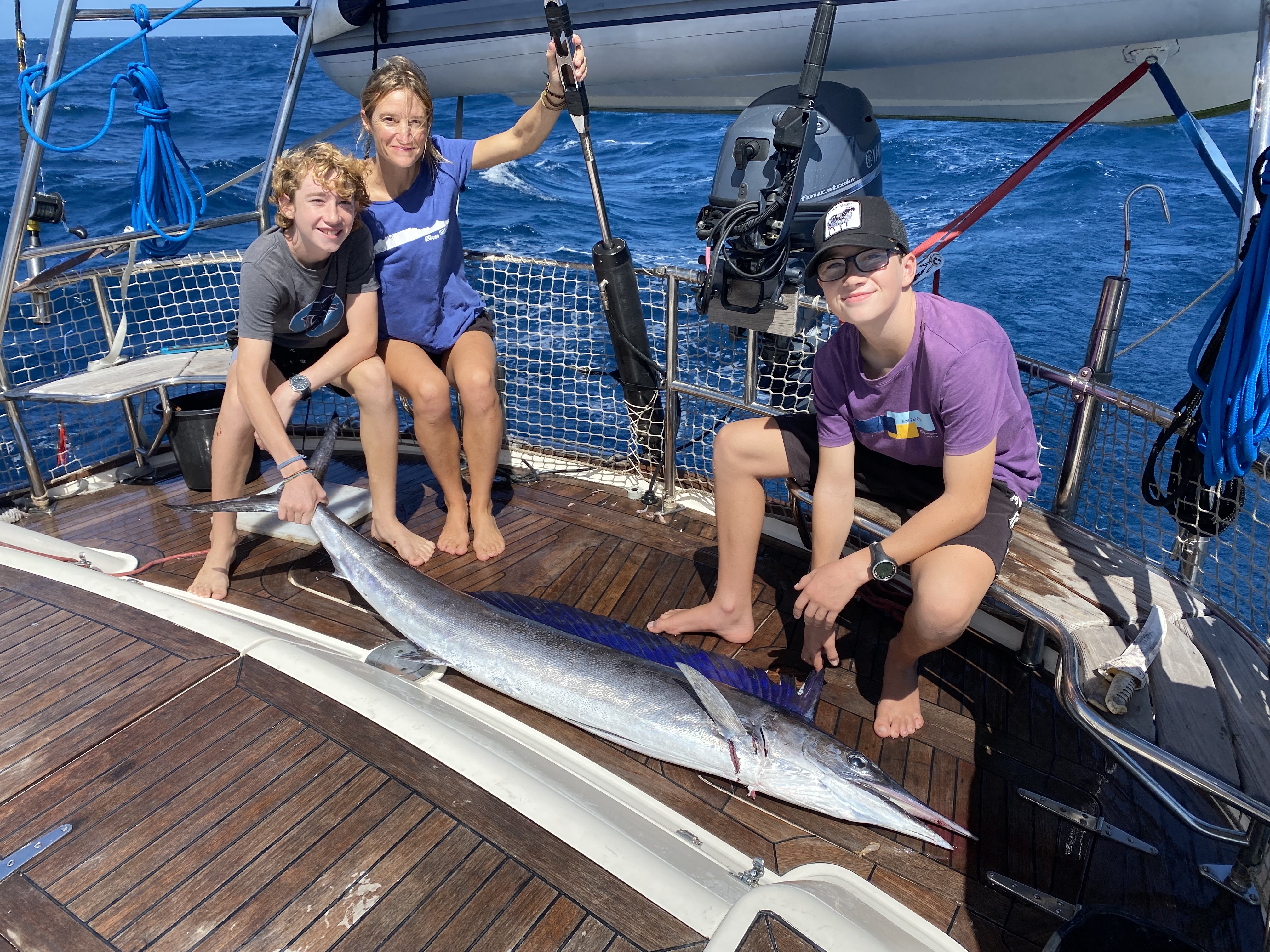
I caught a record fish towards the end of the trip, a 55 pound 1.8m short-billed spearfish. It was exciting to catch, and scary to land but I had top crew helping me out. Amandine was fortunately holding tight on to my vest as I was pulled off my feet from the transom, landing flat on my butt, I really thought I would end up in the drink.
It is day 14, we have less than 24 hrs until we reach Fatu Hiva, the southern-most island of the Marquesas. Spirits are really high putting aside the fact we are all fatigued from a rough evening with a cross current of 3 knots which resulted in a messy sea state.
On such a big trip we know that even if we are getting close, we aren’t there yet until the anchor is down and well dug into the sand. The wind picked up to a constant 30 knots, we were running dead downwind and all was well. Then the bilge alarm went off. I lifted up the floor boards and heard water gushing into the bilge. I instantly thought the ruder leak had become a major or we had hit something. I woke up Amandine in a panic then looked into the problem. It was extremely relieved to find out it was only a burst connection that was draining our fresh water tank into the bilge. (This was a first).
My biggest frustration of the trip has been the size of the bread that comes out of the bread maker when Amandine makes it, although we use the same ingredients and recipe. She says it is the intention of the cook that affects the result. I shrug off the hippy comment and go back to trimming my sails again.
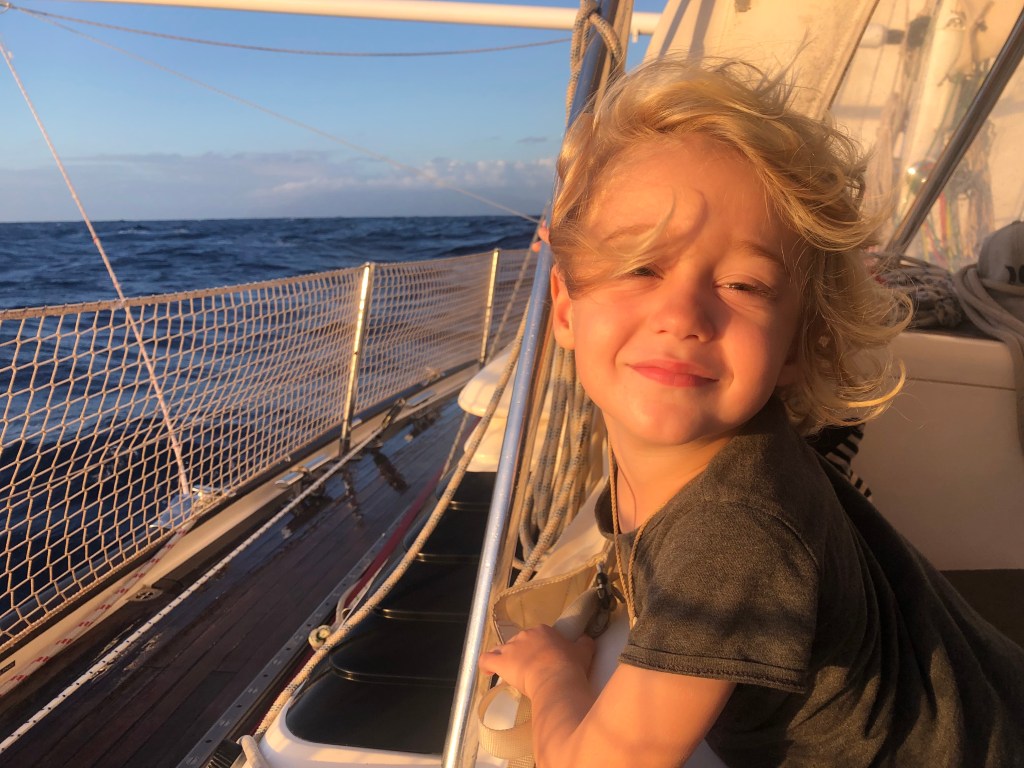
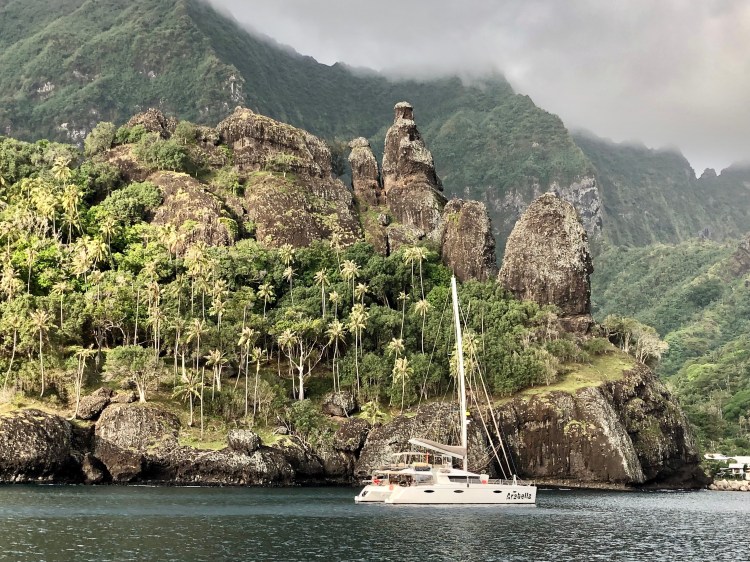
Just after dawn on the 26th of September we arrived in Fatu Hiva, into a magnificent bay with luscious green mountains towering over the water.
Grant dropped anchor over to one side of the bay to allow us some room. It was really windy so I waited until they were set until we found out that their chain was caught on a rock, with minimal chain out and the windlass just stopped working. That is a story in itself but after a couple of hours both boats were safely settled in and had a celebratory drink, feeling exhausted and elated.
It has been a great and fast ocean passage. Overall, 15 days, 20 hours. We covered 3304 nm, averaging 207 miles per day, and 8.6 knots of speed. An action packed sail!


Brilliant, Si xxx
Sent from my iPhone
>
LikeLike